The Question That Writes Your Next 10 Pieces of Content
One open question to your audience can generate more actionable content direction than any brainstorm session you'll run alone.

Think about the last time you sat down to brainstorm content ideas. You probably generated a list, evaluated it against what you know about your audience, picked the ideas that felt strongest, and started from there.
Now think about what your audience was doing while you were brainstorming. They were living the problems you were guessing at. They had opinions you weren't asking for. They had questions you didn't know to answer.
That's the gap. Not a large one, necessarily — you probably know your audience reasonably well. But the difference between content ideas generated from the inside and content ideas generated from what your audience actually told you is the difference between your best guess and documented demand.
One question can close that gap and generate more actionable content direction than any brainstorm session you'll run alone.
How the pipeline works
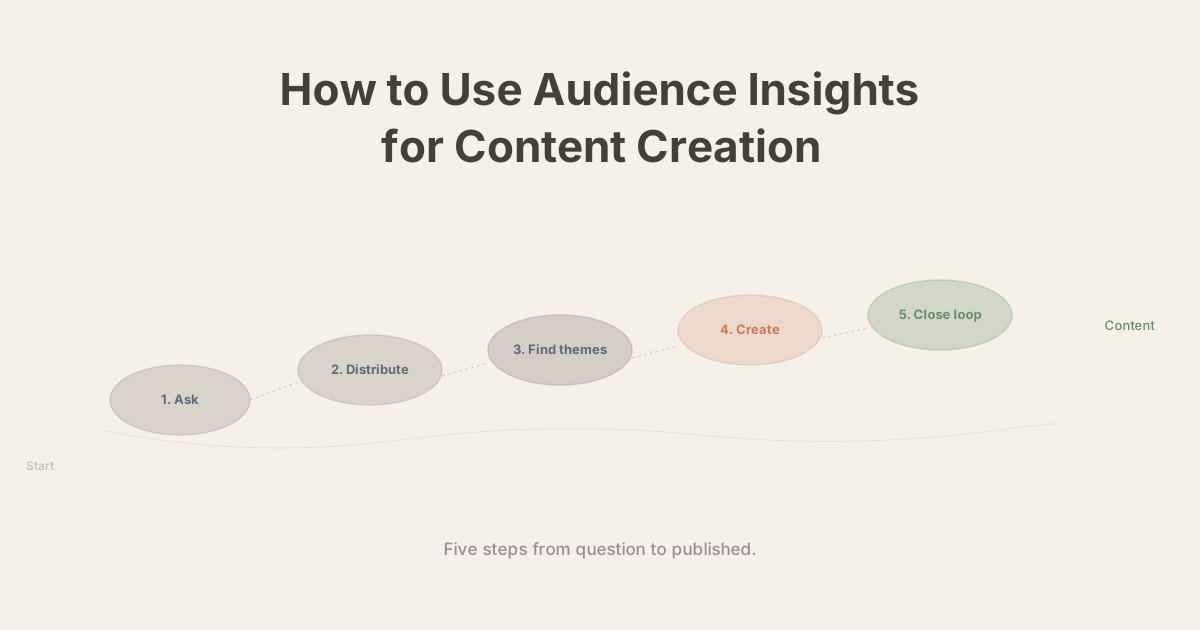
Ask your audience one open question. Collect the responses. Find the themes. Each theme is a piece of content.
That's the whole pipeline, and it works because it skips the part where you're estimating what your audience wants. You're not inferring from analytics. You're not extrapolating from comments. You're reading what your audience told you, in their own words, and building from that.
Suppose you ask: "What's the one topic in [your niche] that nobody explains properly?" You get three hundred responses over a week. When you read through them, a few things keep appearing: the same confusion framed in different words, the same frustration mentioned from different angles, a cluster of questions around a topic you've covered briefly but never gone deep on.
Each of those clusters is an episode, an article, a video. Not a guess about what might resonate — something your audience has told you it needs, in enough different ways that the demand is clear. The topic you go deep on next isn't the one that feels editorially interesting. It's the one your audience flagged repeatedly.
What the quiet majority tells you
With fifty responses, you can read everything yourself and form a picture. With five hundred, you start skimming — and skimming introduces bias toward whatever catches your eye, which tends to be the unusually articulate or unusually critical responses rather than the consistent ones.
The patterns that matter most in audience responses are often the quiet majority: the thing 40% of people mentioned without making a dramatic point of it. These are easy to miss when you're reading, because they don't stand out. They're just... everywhere.
Synthesis — whether you do it manually by reading for recurrence, or with a tool that clusters automatically — surfaces what's consistent. Not the most dramatic response, not the most articulate one, but the themes that repeat across the most voices. That's different from reading. And it's usually more useful than any individual response, however well-written.
We built AskEveryone around this pattern: ask a question, collect responses, surface the themes that repeat. The tool isn't the point. The habit is. It works the same way with a spreadsheet and a highlighter — just slower.
Matching questions to content formats
Different questions feed different types of content, and it's worth being intentional about which you're asking.
"What are you struggling with right now?" generates tutorial and how-to content. The responses are specific problems that need solutions. Each distinct struggle that comes up repeatedly is a piece that teaches something.
"What do you disagree with me about?" generates opinion and essay content. The responses give you the counterarguments you haven't addressed, the assumptions your audience doesn't share, the places where your perspective isn't as universal as it feels from the inside.
"What's your story with [topic]?" generates narrative and case study content. The responses are real examples — how people actually encountered the problem, what they tried, what happened. These become the "here's what readers tell me" pieces that tend to resonate beyond your existing audience.
"What should I make next?" generates a roadmap. The responses are direct requests. Not all of them are feasible or fit your direction — but the ones that cluster tell you something real about unmet demand.
The co-creation effect
There's something beyond content ideas in this process. When your audience contributes to what you make — when they see their language, their question, their frustration reflected in something you published — the relationship changes.
They didn't just consume content. They shaped it.
That distinction matters more than it might seem. It's the difference between an audience and a community: whether the people you serve have any stake in the work, or whether they're just on the receiving end of it.
When you ask a question, find the themes, make something from them, and tell your audience you did it — you close a loop most creators never close. Each time you close it, the next question gets more responses. Each response makes the next piece better.
The flywheel isn't a metaphor. It's the actual mechanic that compounds over time.
The practical starting point
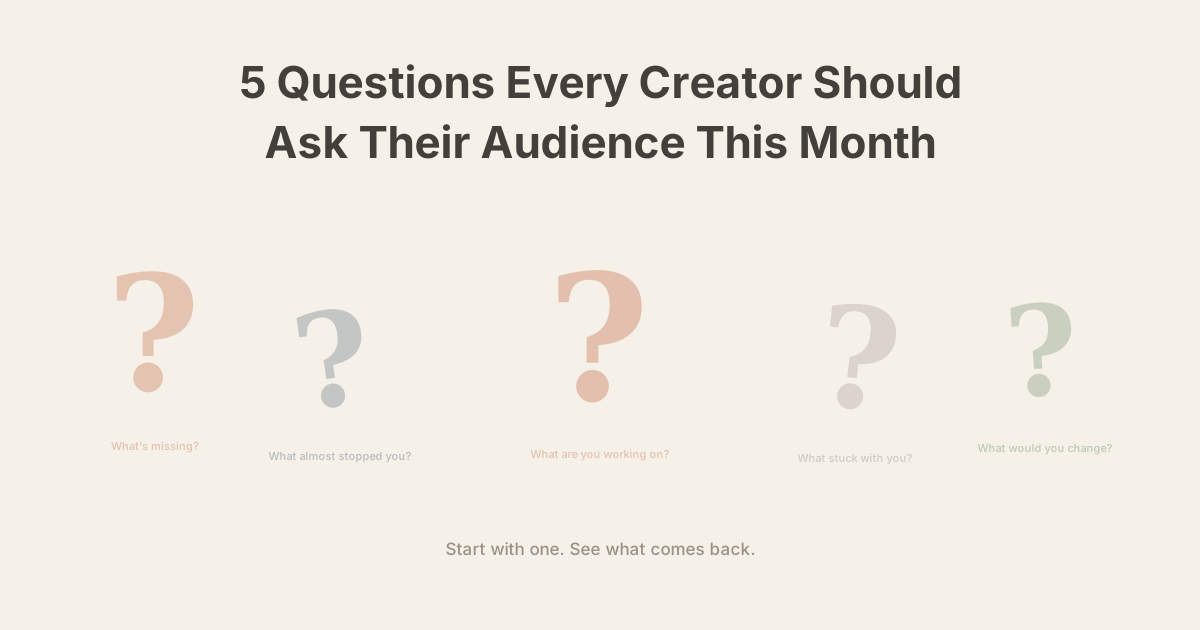
Ask one question this week. Make it open-ended, specific enough to answer, and something you actually want to know. Read what comes back. Find the thing that three or more people said in different ways. Make something from it. Then tell your audience you did.
That's one cycle. Four or five cycles in, you'll have a content direction built on what your audience actually told you — and a habit that makes the next brainstorm session beside the point.
Tags

Want insights like this for your audience?
Set it on autopilot. One question a week, every response analyzed into insights you can actually use.
Start free — no credit card