From Raw Responses to Narrative: What Synthesis Actually Does
When we tell creators that synthesis turns their audience's responses into themes, the first question is: how do I know it's accurate? Here's an honest answer.
AskEveryone
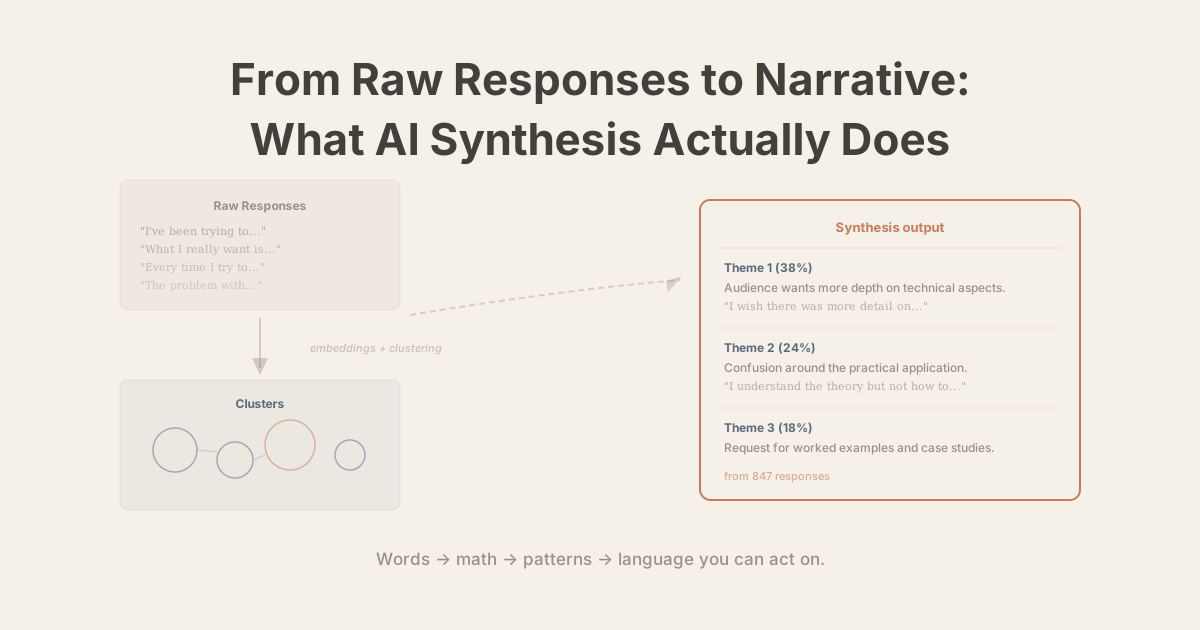
When we tell creators that synthesis turns their audience's responses into themes and insights, the first question is usually: how do I know it's accurate?
That's the right question. Here's an honest answer.
What the process looks like, without jargon
The starting point is the raw responses — whatever your audience wrote in their own words. Three hundred people's answers to one question. Before any analysis happens, these are just text.
Step one: turning words into math.
Each response is converted into a numerical representation called an embedding. Think of it as translating meaning into coordinates in a space with hundreds of dimensions. The specific coordinates aren't interpretable by humans, but they have a useful property: responses that say similar things end up positioned near each other in that space, regardless of the specific words used.
"I wish there was more depth on the technical side" and "your coverage of the technical topics feels shallow" are different sentences. In embedding space, they land close together. The math has captured the semantic similarity even though the surface text is different.
Step two: finding the clusters.
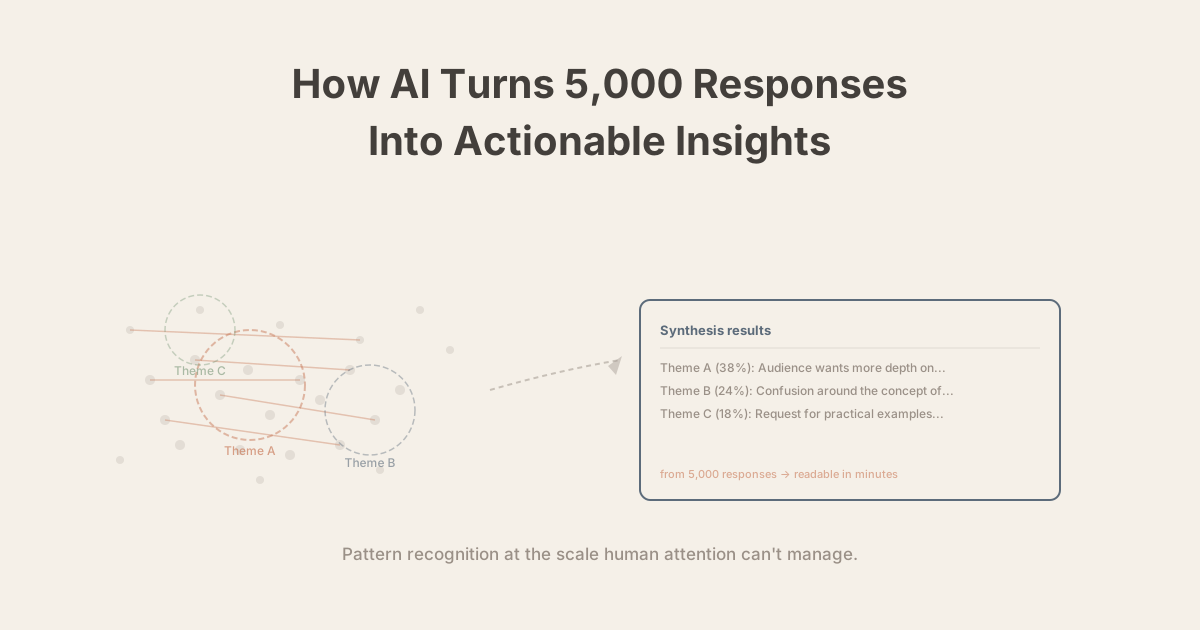
Clustering algorithms identify natural groupings in the embedding space — responses that are close to each other, separated from responses that are far away. These clusters are the raw themes.
This step is important: the themes emerge from the structure of the data, not from a researcher deciding how to categorize things. If 40% of your audience said variations of the same thing, a cluster forms around that. If 3% said something unusual, it forms a small cluster or appears as an outlier. The math reflects the actual distribution of what people said.
Step three: describing what was found.
A language model reads each cluster and generates a description: what the theme is about, how many responses belong to it, representative quotes that illustrate it, and the emotional character of the responses. This is where the readable output comes from.
The language model isn't inventing the themes. It's articulating in human language what the mathematical clustering found.
What makes this trustworthy (and what doesn't)
The accuracy of synthesis depends on the quality of each step.
Embeddings are generally reliable — the mathematical representation of meaning is well-developed and consistent across different phrasings. The clustering is the output of algorithms that have been studied extensively in research contexts. The descriptive layer — where a language model writes the readable summary — is where the most variation can appear.
Language model descriptions occasionally overstate the coherence of a cluster, or miss a nuance that careful human reading would catch. This is why the representative quotes matter — they let you check the description against the actual responses. If the description says "respondents expressed enthusiasm" and the quotes feel more ambivalent, the quotes are right.
The practical check: themes supported by large clusters with diverse phrasings are robust. They reflect something real that many people said independently. Themes supported by small clusters with similar phrasings might be one person said something interesting, not a widespread pattern.
What can go wrong
Three things to watch for.
Small samples produce unreliable themes. Below roughly fifty responses, clusters don't have enough variation to be meaningful. The synthesis will technically produce output, but it shouldn't be treated as statistically reliable. For small response sets, reading manually is both faster and more accurate.
Outliers can be misassigned. Responses that don't clearly belong to any cluster get assigned to the nearest one. This is usually harmless — an outlier in a large cluster is invisible — but occasionally a genuinely unusual and important response gets categorized as part of a theme it's only loosely related to. Outlier surfacing, which flags responses that don't fit well anywhere, helps catch these.
Framing effects in the description. AI-generated descriptions of themes can use language that subtly frames the findings — describing something as "concern" versus "frustration" versus "confusion" changes how you interpret it. Read the supporting quotes directly, not just the description.
What you do with the output
A synthesis report gives you a ranked list of themes with frequencies and representative quotes. That's the structured view of what your audience said.
What you do with it is still yours to decide.
The theme that 38% of your audience mentioned — that they want more practical examples, that the current format doesn't address their specific context, that there's a related topic they keep looking for and not finding — tells you something real. Whether it changes what you make depends on whether it fits your direction, your audience's needs as you understand them, and your own creative judgment.
Synthesis is an input to that judgment, not a replacement for it. The patterns it surfaces are more reliable than what you'd find by reading selectively. What you build from those patterns is still the creative work — still yours.
Tags
Want insights like this for your audience?
Set it on autopilot. One question a week, every response analyzed into insights you can actually use.
Start free — no credit card