AI Won't Replace Creators, But It Will Help Them Listen
Most AI discourse in the creator economy is about generation. The more interesting application is listening at scale.
AskEveryone
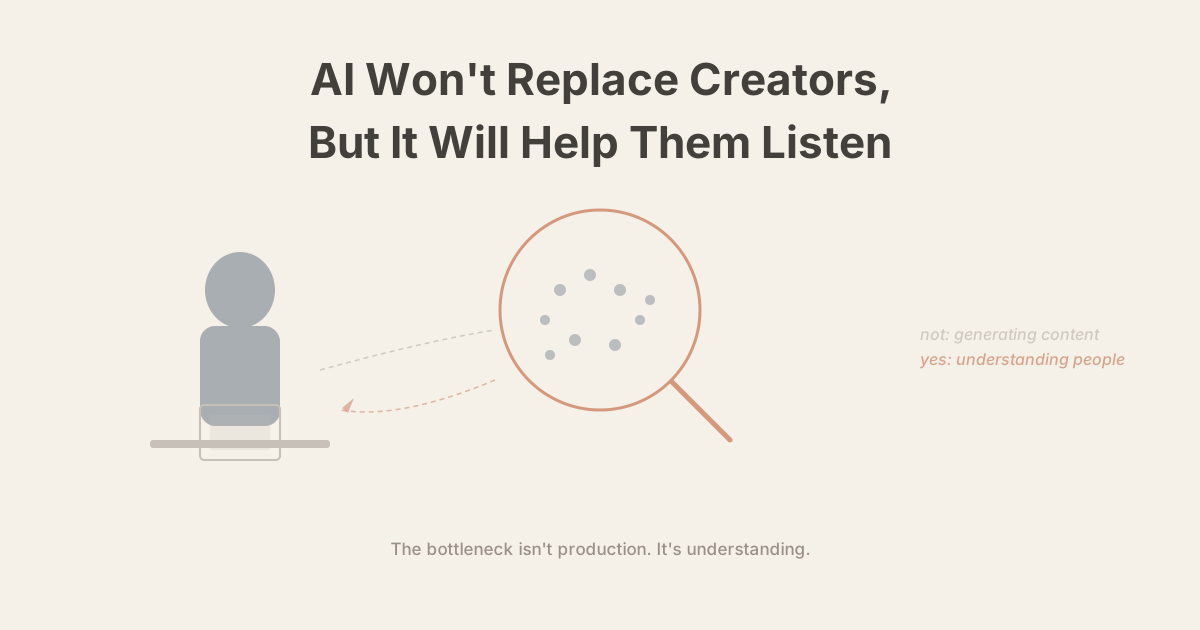
Most conversations about AI in the creator economy are about generation. AI that writes your scripts, designs your thumbnails, drafts your newsletters, suggests your topics. The question is always some version of: will AI replace the creator?
That's the wrong question. And it's distracting from the application that's actually useful.
The bottleneck in most creators' work isn't creating. It's understanding. Most creators have more ideas than time. What they lack is confidence that the ideas they're pursuing are the right ones — certainty, grounded in what their audience actually thinks, that the direction they're taking is the direction their audience would choose.
AI's most useful role in the creator economy isn't production. It's listening.
The generation trap
There's a seductive logic to AI-generated content: it's faster, it scales, it can cover more ground than any individual creator. If the bottleneck is volume, AI is a plausible solution.
But volume was never the bottleneck. There's more content than anyone can consume already. What's scarce isn't the quantity of content — it's the quality of understanding between creators and their audiences. The ability to know, specifically and reliably, what the people you serve actually need.
Generating more content faster doesn't close that gap. It might widen it — more output produced with less contact with the people it's meant to serve.
The creator who uses AI to write their newsletter faster has the same understanding problem they had before, now producing at higher volume. The creator who uses AI-assisted analysis to make sense of what their audience told them in response to a direct question has actually learned something.
What listening at scale looks like
Until recently, understanding your audience at scale meant one of two things: quantitative data (analytics, metrics, behavioral signals) or expensive qualitative research (focus groups, interviews, manual coding of survey responses).
Both had meaningful limits for independent creators. Analytics tell you what happened but not why. Qualitative research requires time and expertise most creators don't have.
LLM adoption in survey research jumped from 1.6% to 59% in a single year. That's not a gradual trend — it's a step change. The capability that was previously accessible only to research teams is now accessible to individuals. Computational approaches to qualitative coding reduce analysis time by 80-98% compared to manual methods.
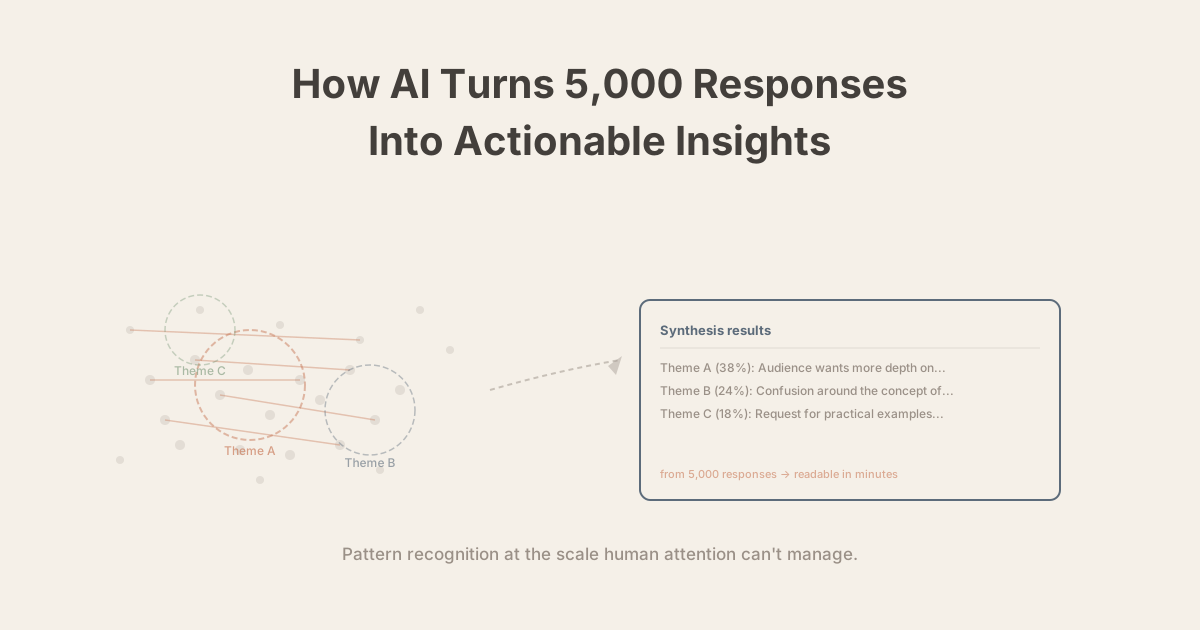
For creators, this means: ask your audience a real question, collect hundreds of responses, and understand what they said — without spending days reading everything manually. The question is no longer whether you can afford to collect and analyze qualitative audience data. It's whether you've started.
What AI actually does in this context
It's worth being precise about the role AI plays, because it's different from the generation use case.
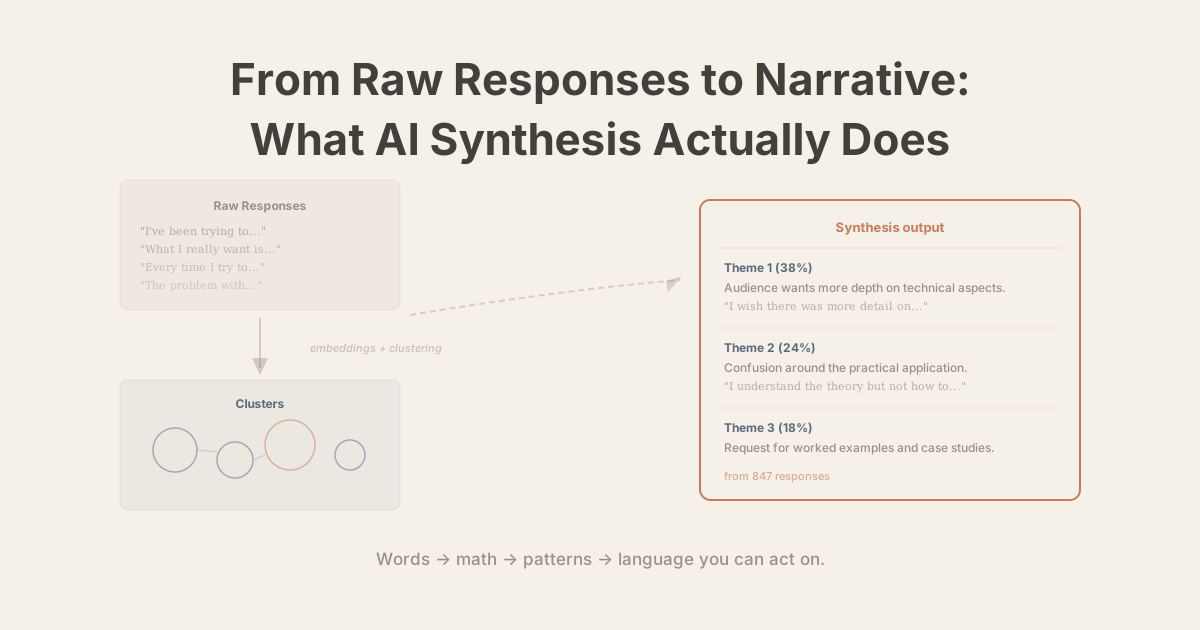
In audience research, AI is layered on top of a mathematical pipeline. Statistical clustering identifies the themes — the patterns that are consistent across many responses. That part is math, not AI. The AI describes what the math found: articulates in readable prose the theme that 40% of your audience mentioned, quotes the most representative responses, characterizes the sentiment.
The AI didn't generate opinions or manufacture insights. It organized what was already there.
This is a genuinely different application than generation. It's closer to a research assistant than a ghostwriter — something that makes human judgment better by giving it better material to work with, without inventing the material itself.
What it doesn't change
AI-assisted analysis of audience responses doesn't solve the self-selection problem: you're hearing from people who responded, not your whole audience.
It doesn't tell you what to do with what you find. The themes surface; the creative and strategic decisions remain yours.
It doesn't replace the relationship. The reason your audience responds honestly — if they do — is because they trust you and find the exchange worthwhile. That trust isn't created by the technology. It's created by asking consistently, listening genuinely, and closing the loop by sharing what you heard and what you made from it.
The AI handles the part that was previously a bottleneck — making large quantities of qualitative data usable. The part that was always the creator's job — building the audience relationship that makes honest feedback possible — is still the creator's job.
The right question
The interesting question isn't "will AI replace creators?" It's "what becomes possible when creators can actually understand their audiences at scale?"
Better content direction. More confident creative decisions. Products built around documented demand rather than estimated need. Audience relationships grounded in genuine dialogue rather than inference from metrics.
These have always been available in principle. The practical barrier — the time and expertise required to analyze qualitative data at scale — is dissolving. What replaces it is the question of whether creators will build the habit of asking.
Tags
Want insights like this for your audience?
Set it on autopilot. One question a week, every response analyzed into insights you can actually use.
Start free — no credit card