8 Ways AI Is Changing Audience Research
These aren't coming. They're here. Eight specific changes, from real-time synthesis to the collapse of analysis cost.
AskEveryone
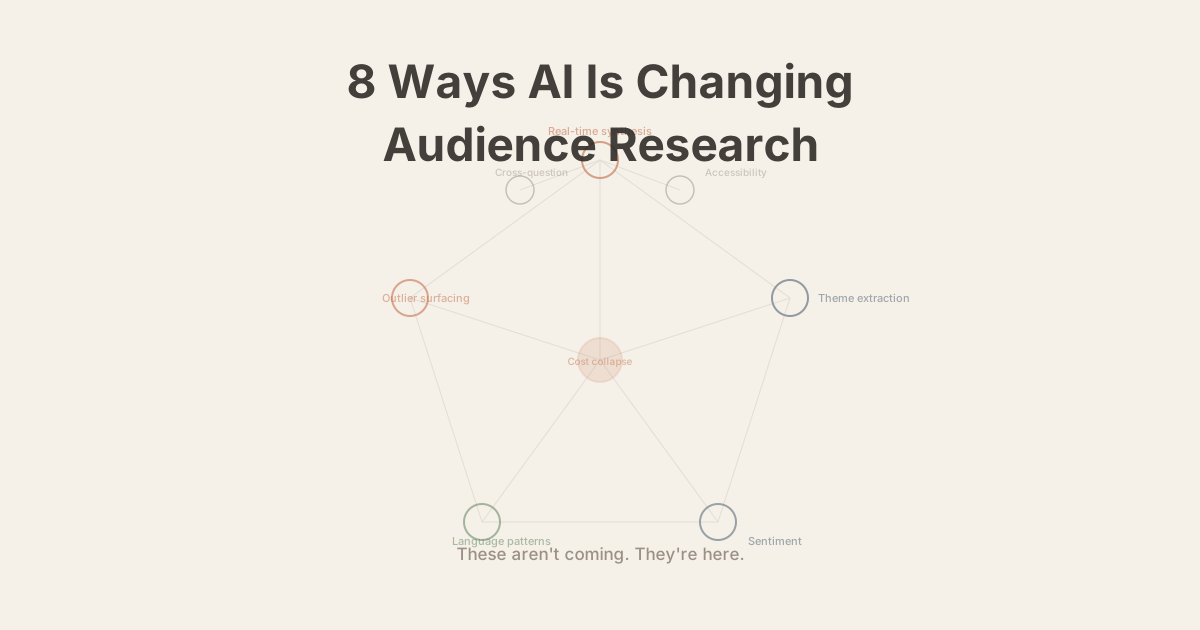
A year ago, some of these were emerging. Now they're practical. Here's what's actually different.
1. Qualitative analysis at scale is no longer a research team job.
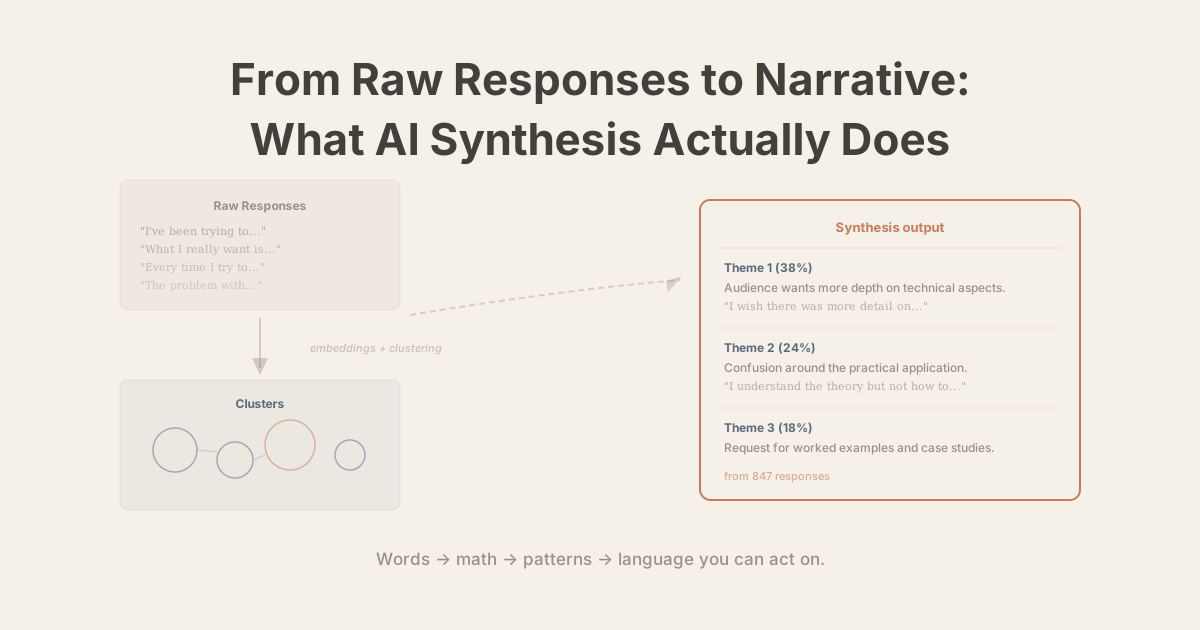
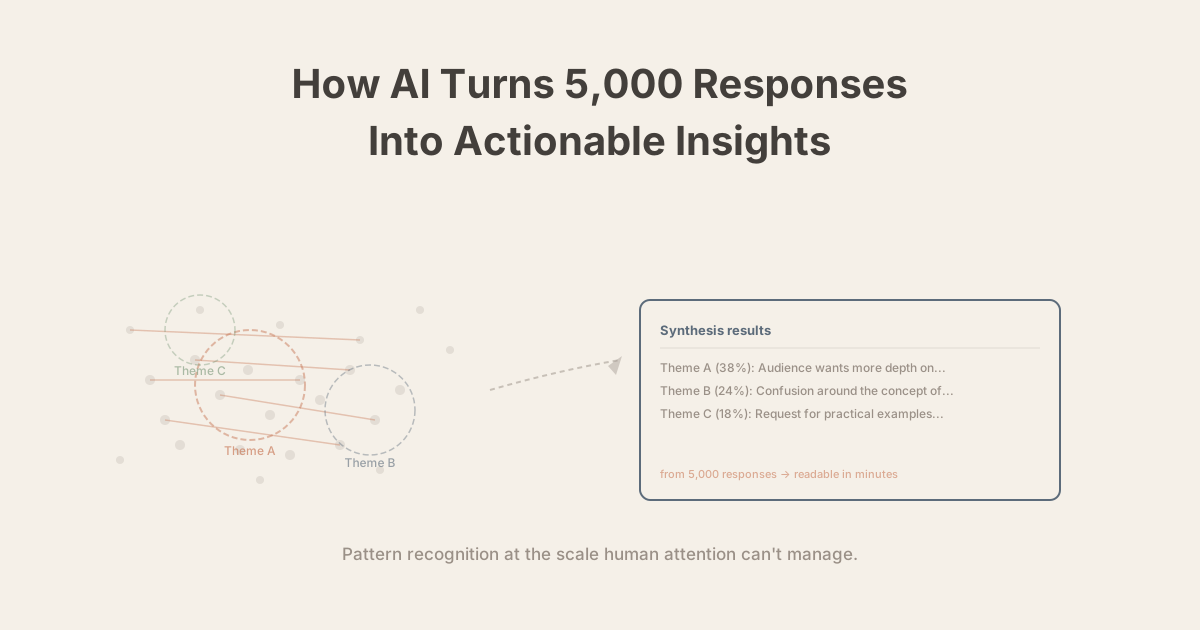
Reading and coding hundreds of open-ended responses — finding themes, extracting patterns, synthesizing what a large group collectively said — used to require expertise and hours. Computational approaches now reduce this time by 80-98% compared to manual methods.
The practical implication: collecting open-ended responses is now worthwhile at creator scale. The barrier that drove the adoption of structured (poll/rating) formats — analysis cost — has largely dissolved.
2. Themes emerge from the data, not from the researcher's categories.
Traditional qualitative coding involves a researcher deciding in advance what categories exist, then fitting responses into them. This introduces the same problem as multiple choice polls: you find what you were looking for, not necessarily what's there.
Modern clustering identifies themes bottom-up — from the mathematical structure of the responses, not from predetermined categories. The result is discovery rather than confirmation.
3. Sentiment analysis works across hundreds of voices simultaneously.
Understanding whether your audience is enthusiastic, frustrated, confused, or ambivalent about a topic used to require reading everything and forming a subjective impression. Automated sentiment analysis does this across every response simultaneously, producing a consistent signal that isn't subject to the reader's own state of mind when they were reading.
This is particularly useful for tracking change over time: the same question asked quarterly, with sentiment compared across cycles, shows whether the mood has shifted.
4. Your audience's language is now systematically extractable.
The specific words, phrases, and framings your audience uses to describe a problem or a topic — their vocabulary, not yours — are findable in aggregate. Theme extraction surfaces the phrases that appear most consistently across responses, in the phrasing your audience actually uses.
This is useful for content, titles, descriptions, and marketing copy. The language that resonates with your audience is already in their responses. You just needed a way to find it.
5. Outliers surface instead of disappearing.
In manual analysis, responses that don't fit the main themes tend to get lost. They're unusual, they don't reinforce the pattern, they're easy to skip past when you're reading quickly.
Outlier detection can specifically surface these — the responses that cluster furthest from the main themes, that say something unusual or unexpected. Sometimes these are noise. Sometimes they're the most important thing in the dataset, visible precisely because they're different from everything else.
6. Cross-question patterns are findable.
If you ask your audience questions regularly over months, the responses accumulate into a dataset. Longitudinal analysis can find patterns across that dataset that aren't visible in any single question cycle: topics that keep coming up regardless of the question asked, sentiment that's consistent across different framing, language that your audience returns to.
This longitudinal view of what your audience cares about is something manual analysis of individual question cycles can't produce.
7. The cost of being wrong about your audience has dropped.
Before computational analysis made qualitative research tractable at individual scale, the cost of a decision made on misunderstood audience data was hard to recover from. You'd run a survey, analyze it manually, make decisions from it — and by the time you found out you'd misread something, you'd already built in the wrong direction.
Faster cycles and cheaper analysis mean you can check your understanding more frequently. A wrong assumption can be corrected within weeks rather than after months of building on it.
8. Research that used to cost thousands is now accessible to individuals.
Proper qualitative audience research — the kind with synthesis, theme extraction, sentiment analysis, and systematic outlier review — used to require a research budget. It was available to brands and large organizations. It wasn't available to solo creators.
LLM adoption in survey research jumped from 1.6% to 59% in a single year. The tools are here, and they're accessible at individual scale. The question isn't whether creators can afford to do this properly now. It's whether they've built the habit of asking.
The technology has changed. The principle hasn't: listen to the people you serve. What's new is being able to listen at the scale most creators are already operating at.
Tags
Want insights like this for your audience?
Set it on autopilot. One question a week, every response analyzed into insights you can actually use.
Start free — no credit card