Why We're Not a Poll (And That's Intentional)
Polls get 3-4x more engagement than text posts. They also can't tell you anything that isn't on your list.
AskEveryone
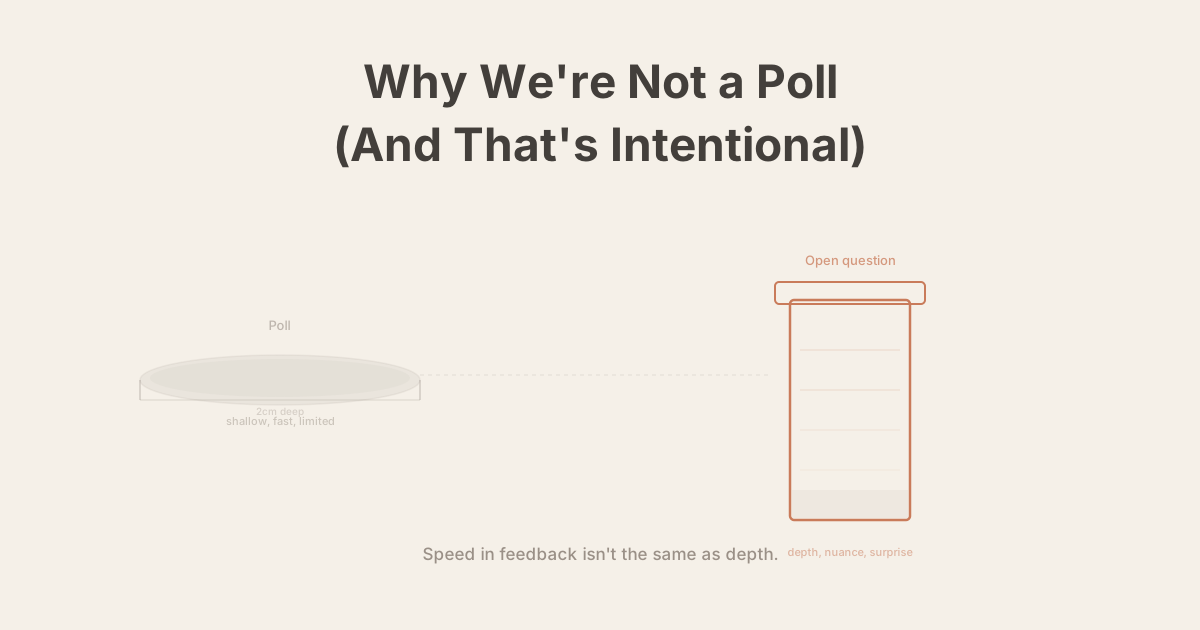
People sometimes describe AskEveryone as a poll tool. We're not, and the distinction matters enough to explain clearly.
Polls are fast. They're engaging. They generate reactions. They're also structurally incapable of producing the thing we're built for: genuine understanding of what your audience thinks.
What polls do well
Polls have real value. They generate high engagement — community posts with polls get three to four times more interactions than text-only posts. They're good at quick decisions between defined options. They're good at creating a sense of participation. They're low-friction enough that people who would never write a comment will tap a poll option.
For what they're built to do — quick temperature checks, lightweight engagement, binary decisions — they work.
What polls structurally can't do
A poll answer contains exactly one bit of information: which of your preset options this person chose.
That's it. No reasoning. No nuance. No context. No indication of whether they felt strongly or vaguely. No access to the thing they would have said if you hadn't given them a menu.
And here's the structural problem: the most valuable thing your audience would tell you is almost always something that isn't on the list. The topic you haven't thought to ask about. The confusion that doesn't fit into any of your four options. The thing that multiple people are thinking that you haven't articulated yet.
Polls can confirm things you already suspected. They can't surface things you don't yet know. And most of the time, what you don't yet know is what's most worth finding out.
The speed problem
Polls feel like listening because they produce numbers quickly. But speed in feedback collection is a double-edged thing.
Fast feedback is only valuable if it's accurate. A poll that gets 50,000 responses in an hour tells you fifty thousand people tapped one of your four options. Whether that reflects what they actually think, or just what they were willing to express in the format you gave them, is a different question.
The fastest feedback isn't always the truest. Someone who took thirty seconds to write a paragraph in response to an open question gave you something that a thousand poll taps couldn't match for understanding.
The reaction/understanding distinction
There's a category distinction worth naming. Polls, likes, comments, shares — these are reaction metrics. They measure how people responded in the moment to something you put in front of them.
Understanding is different. Understanding is what your audience would say if you asked them something genuinely open, gave them space to think, removed the social performance cost, and listened to what they actually said.
Reactions are faster to collect and easier to analyze. Understanding is harder to collect and harder to analyze — or it was, until synthesis tools made the analysis tractable. The value difference between a reaction and a real answer is significant, and it shows up over time in the quality of the decisions you make.
What we built instead
One question. Open-ended, so the answer isn't constrained by a list you wrote. Anonymous, so the social performance cost is removed. Weekly, so it's a habit and a rhythm rather than an event. With synthesis that surfaces the patterns, so the responses are usable without hours of manual reading.
The goal wasn't higher engagement numbers. It was understanding — what your audience actually thinks, in their own words, at a scale that's practically usable.
That's not a poll. It's something different, designed for a different job.
Tags
Want insights like this for your audience?
Set it on autopilot. One question a week, every response analyzed into insights you can actually use.
Start free — no credit card