AskEveryone vs. SurveyMonkey: Different Tools, Different Goals
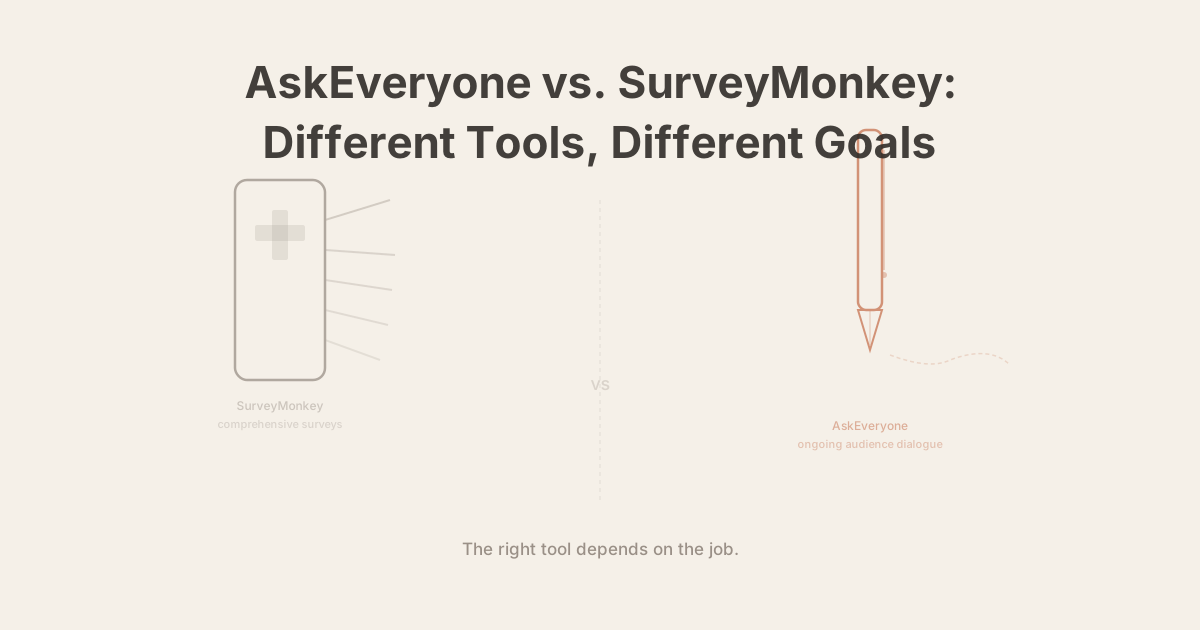
SurveyMonkey is a good tool for surveys. We're not a survey tool. Comparing them is like comparing a journal to a spreadsheet.
AskEveryone
SurveyMonkey is a good tool for surveys. We're not a survey tool.
Comparing us is a bit like comparing a journal to a spreadsheet. Both involve writing. Both store information. The job they're built for is completely different, and using one to do the other's job produces predictably bad results.
That said, people do compare them — usually because they're looking for feedback from their audience and wondering which tool fits. Here's the honest answer.
What SurveyMonkey is built for
SurveyMonkey is purpose-built for structured data collection: multi-question surveys, branching logic, response validation, statistical analysis, exportable reports. It's the kind of tool you reach for when you need to ask twenty questions, get clean quantifiable data back, and present the results in a chart to stakeholders.
For what it's designed to do, it's mature and capable. Annual customer satisfaction surveys. Employee engagement forms. Market research studies. Academic surveys. Event feedback with specific reporting requirements. If the goal is comprehensive structured data collection, SurveyMonkey has a decade of iteration behind it.
What that model assumes
SurveyMonkey's design assumes some things about what you're trying to do:
You know what you're trying to measure before you start. You need the data in a structured, quantifiable form. You're running a periodic event — a survey sent once, analyzed once, filed. Your respondents have a reason to complete a form (they're employees, customers who just bought something, students in your class).
For creators, most of those assumptions don't hold.
You often don't know what you're trying to understand — you're trying to discover something, not confirm it. Open-ended, ongoing dialogue produces different insights than periodic structured surveys. Your audience is voluntary — they have no obligation to complete a form, and 70% of people quit surveys before finishing them precisely because the ask feels out of proportion to the relationship.
What AskEveryone is built for
Different assumptions entirely.
One question at a time. Open-ended, so the answer is always something your audience chose to say — not something from a list you wrote. Anonymous, so the social performance cost is removed and honest responses become possible. Weekly cadence, so it's a rhythm rather than an event. Synthesis that surfaces the patterns, so hundreds of responses become readable themes without hours of manual analysis.
The job isn't comprehensive data collection. It's ongoing understanding — what your audience is thinking, what they need, what's missing. That's a different job, and it requires a different instrument.
The analogy that feels right to us: surveys are how you measure something you already understand well enough to quantify. Questions are how you understand something well enough to eventually quantify it. One comes before the other.
When to use which
Use SurveyMonkey when: you need structured data across multiple dimensions, you have an audience with an obligation to respond (employees, paying customers), you need to run statistical analysis or present formal results, or you're collecting data for a specific one-time purpose.
Use AskEveryone (or the single-question approach generally) when: you're trying to understand your audience on an ongoing basis, you want honest responses from people who have no obligation to give them, you're exploring something you don't fully understand yet, or you want a feedback loop that builds over time rather than a dataset you analyze once.
Most creators need the second job far more than the first. Most creator tools are built for the first.
The honest comparison
SurveyMonkey's limitations for creators include pricing that scales steeply with the features creators actually need, a UI designed for research professionals rather than content creators, and a format (long surveys) that's increasingly poor at reaching voluntary audiences. Survey response rates drop from 30% to 18% even in managed contexts — for creator audiences, the resistance is higher.
AskEveryone's limitations include not being built for comprehensive structured data collection. If you need twenty questions with branching logic and export to Excel, we're not the right tool.
But if you want to know what your audience actually thinks, consistently, without exhausting them in the process — that's what we built.
Tags
Related Posts
Want insights like this for your audience?
Set it on autopilot. One question a week, every response analyzed into insights you can actually use.
Start free — no credit card