From Audience to Community: The Difference Is Dialogue
An audience watches. A community participates. The transition happens when the relationship runs in both directions.
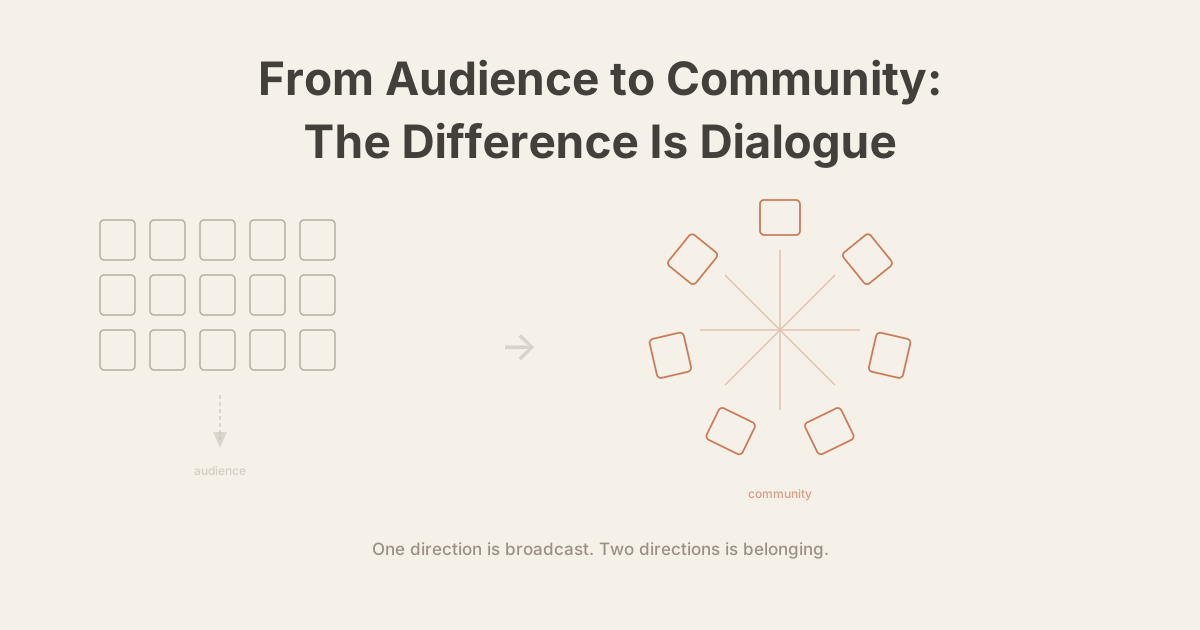
You can have a hundred thousand followers and no community. The number isn't the thing.
An audience watches. It receives. The relationship runs in one direction — creator to audience — and that's fine for what it is. A lot of valuable work happens in that model. But audiences are fragile in a specific way: they're held together by the content, not by each other or by any stake in the work. When the content stops, or changes, or disappoints, the audience disperses.
A community is different. It has lateral connections — between members — and a relationship that runs in both directions. Members have participated in something, shaped something, contributed to something. They have a stake in the work that passive consumption doesn't create.
The transition from audience to community isn't about size or platform or community management tools. It's about whether you've created a channel for the relationship to run both ways.
What the broadcast model gives you (and what it doesn't)
One-way distribution is efficient and scalable. You make something, it reaches people, they consume it. The feedback loop is indirect — you infer from analytics whether it worked, adjust, and make the next thing.
This model works remarkably well for reach. It's how content grows. It's why good content compounds — each piece draws new people in, the back catalogue provides value to new arrivals, the platform rewards consistency.
What it doesn't build is investment. A subscriber who receives your content is different from a subscriber who has participated in it. The first has a reason to stay as long as the content is good. The second has a reason to stay that goes beyond any individual piece — they've been part of something.
The distinction matters most when things change. Content evolves. Formats shift. Audiences grow past what originally attracted them. The broadcast audience follows as long as the new content is good. The community follows because they have history — they remember the question they answered, the episode that came from it, the thing the creator made because they said something that mattered.
Why unstructured community often fails
Most creators who try to build community take the obvious path: open a Discord, start a Facebook group, enable comments.
The problem is that open community platforms recreate the same problem at a different scale. A Discord server with a thousand members will be dominated by fifty of them. The loudest voices shape the culture. The quiet majority — the people who would be your most loyal members — lurk and leave because the environment doesn't fit how they engage.
Unstructured community attracts extroverts and rewards performance. It creates community for the 1% who enjoy that dynamic, not for the 99% who don't.
Structured feedback does something different. A direct question to your full audience — anonymous, low-friction, one question — reaches the silent majority that open community platforms never do. It doesn't require joining a separate platform or performing publicly for other members. It just requires answering something you actually have an answer to.
The mechanism that creates belonging
There's a specific moment when audience members cross from passive to invested. It happens when they can trace a line from something they said to something you made.
Not because you quoted them or attributed them — that would compromise anonymity and reduce future honesty. But because the piece you made reflects what they told you. The topic they said was missing. The confusion they described. The thing they mentioned multiple people echoing.
When someone sees their input reflected in your work, they experience something that passive consumption doesn't produce: the sense that they shaped something. That they're part of the process, not just a recipient of it.
That's belonging. Not the performative kind — not the kind that comes from posting in a Discord server — but the quieter, more durable kind that comes from being heard and seeing the evidence of it.
We've seen this pattern hold across different creator types: newsletter writers who share synthesis results from their weekly questions, podcasters who open episodes with "you told me X so I wanted to explore it," YouTubers who frame videos explicitly as responses to what their audience raised. The common thread is the closed loop — the moment where the audience can see their contribution reflected back.
The practical shift
You don't need to launch a community platform. You need a rhythm and a direction.
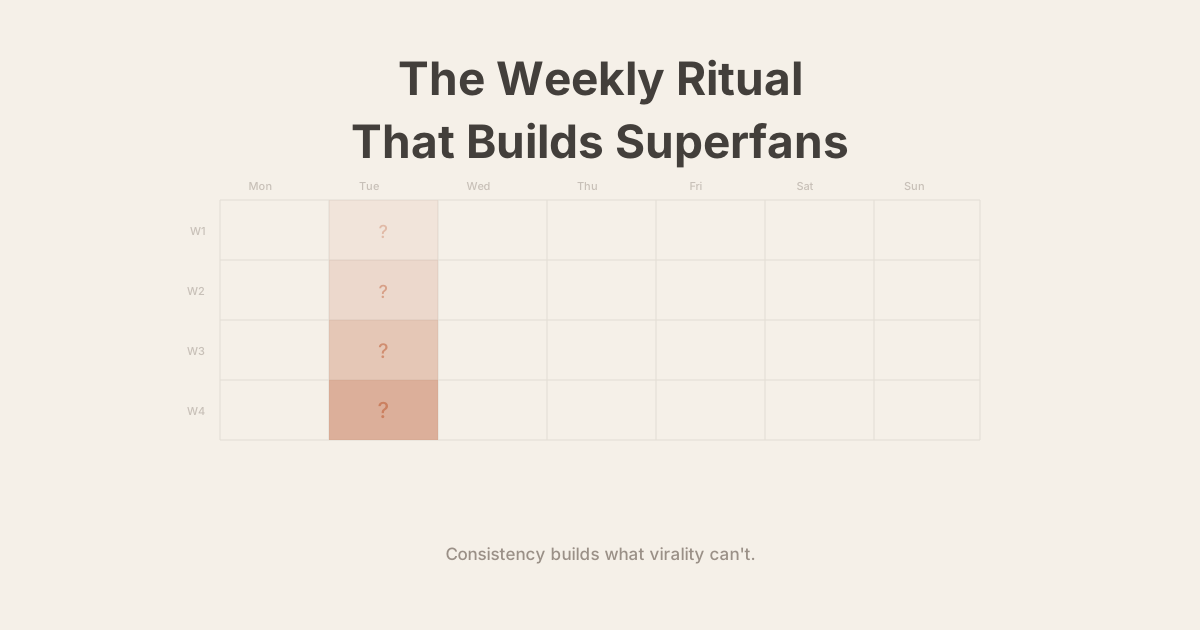
The rhythm: one question per week or per issue, shared with your full audience, anonymous response.
The direction: close the loop consistently. Before the next question, share what the last one surfaced. "Here's what you told me. Here's what I made from it." This doesn't need to be elaborate — a sentence in the introduction, a note in the show description. What matters is that the line is visible.
Over time, the subscribers who respond consistently develop a different relationship with your work than those who don't. They have context. They have history. They remember asking and being heard. That's what community is, at its core — shared history and mutual investment. It's built by dialogue, one exchange at a time.
Tags
Related Posts
Want insights like this for your audience?
Set it on autopilot. One question a week, every response analyzed into insights you can actually use.
Start free — no credit card