The Future of Opinion Research is Conversational
Opinion research has followed the same model for 80 years. AI doesn't improve that model — it makes a different one possible.
AskEveryone
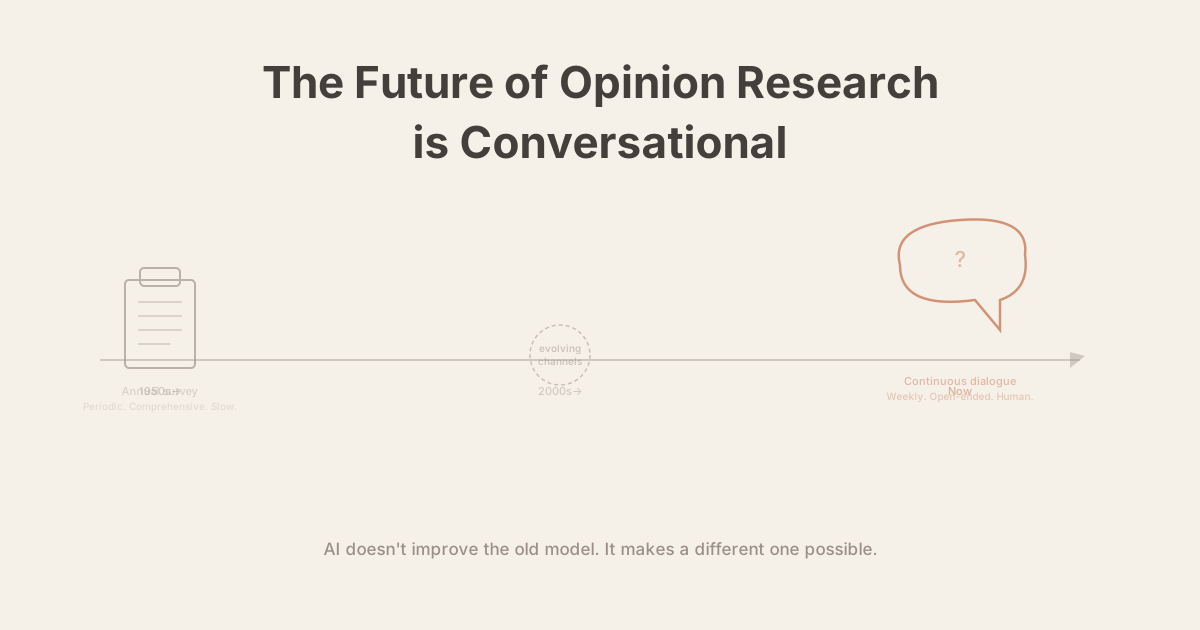
Opinion research has followed roughly the same model for eighty years. Write a list of questions. Distribute them to a sample population. Collect the answers. Analyze the results. Repeat periodically.
The questions have gotten more sophisticated. The distribution channels have changed. The analysis tools have improved. But the fundamental model — periodic, structured, designed to capture a snapshot — has remained stable through polling, surveys, and market research.
Computational analysis doesn't improve that model. It makes a different model possible.
Why surveys were designed the way they are
The periodic, comprehensive survey format wasn't a design choice made for aesthetic reasons. It was a practical response to the economics of research.
Qualitative analysis — reading open-ended responses, finding patterns, synthesizing themes — is time-consuming. Manual coding of a few hundred responses takes a researcher days. For the cost of research to be worth bearing, you needed to ask a lot of questions in each pass and analyze the results comprehensively. You couldn't afford to run a twenty-question survey every week.
So surveys became events. Annual cycles. Large sample sizes to compensate for the cost of running them. Long question sets to justify the budget. The format optimized for making comprehensive data collection affordable — which meant making it infrequent and intensive.
That's fine for the use cases surveys were designed for: market research, political polling, academic studies. It's a poor fit for the ongoing, lightweight dialogue that creators need with their audiences.
What's changed
When analysis is fast and cheap, you don't need to batch everything into one big survey.
Computational approaches to qualitative coding reduce analysis time by 80-98% compared to manual methods. What used to take a research team days takes minutes. LLM adoption in survey research jumped from 1.6% to 59% in a single year — not gradually, but as a step change as the capability became practically accessible.
The bottleneck that justified the periodic-comprehensive format has dissolved. You can ask one question this week, find the themes in the responses, learn from them, and ask a different question next week. The analysis cost is no longer a reason to batch everything together.
This shifts the model from periodic measurement to ongoing conversation. Not replacing surveys — they still serve their purpose for structured data collection — but complementing them with a lighter, faster, more honest channel that was previously too expensive to run.
What "conversational" actually means
It's worth being precise, because "conversational AI" has a different meaning in most current contexts (chatbots, assistant interfaces, dialogue systems).
Conversational opinion research means something specific: continuous, low-friction, open-ended questions asked regularly to the same audience, with synthesis that makes the responses usable, and with results shared back to close the loop.
The "conversational" quality isn't in the technology — it's in the rhythm and the structure. A conversation isn't a form sent once a year. It's an ongoing exchange where both parties contribute, where each round builds on the last, where the relationship develops over time because there's actual dialogue happening.
Creators who have built this rhythm with their audiences describe it differently than those who send occasional surveys. They know more about their audiences because they ask more often. Their audiences respond more readily because they've seen the loop close — they've watched their input change what was made.
Where this is happening now
The transition to conversational feedback is already underway in creator contexts, partly because creators feel the inadequacy of existing channels more acutely than most.
A large organization can run a comprehensive annual employee survey and call it done. A creator who releases content every week, to an audience that can leave at any time, can't afford to understand their audience only once a year. The cadence of the work demands a cadence of feedback.
What's changed is that the infrastructure for this is now accessible at individual scale. One question, asked regularly, with synthesis and public results — this was technically feasible five years ago but practically out of reach. The cost and effort required made it unrealistic for solo creators.
The tools now available close that gap. The question isn't whether the model works — it does. It's whether creators build the habit of using it.
What doesn't change
The technology changes the economics. It doesn't change the human part.
The reason your audience responds honestly — if they do — is because they trust you and believe the exchange is genuine. That trust isn't created by a clustering algorithm. It's created by asking consistently, listening genuinely, sharing what you heard, and making things that reflect it.
The future of opinion research is conversational. But conversations depend on both parties showing up, and on both parties believing the exchange is real.
Tags
Want insights like this for your audience?
Set it on autopilot. One question a week, every response analyzed into insights you can actually use.
Start free — no credit card