The Content Flywheel: Turning Responses Into Reach
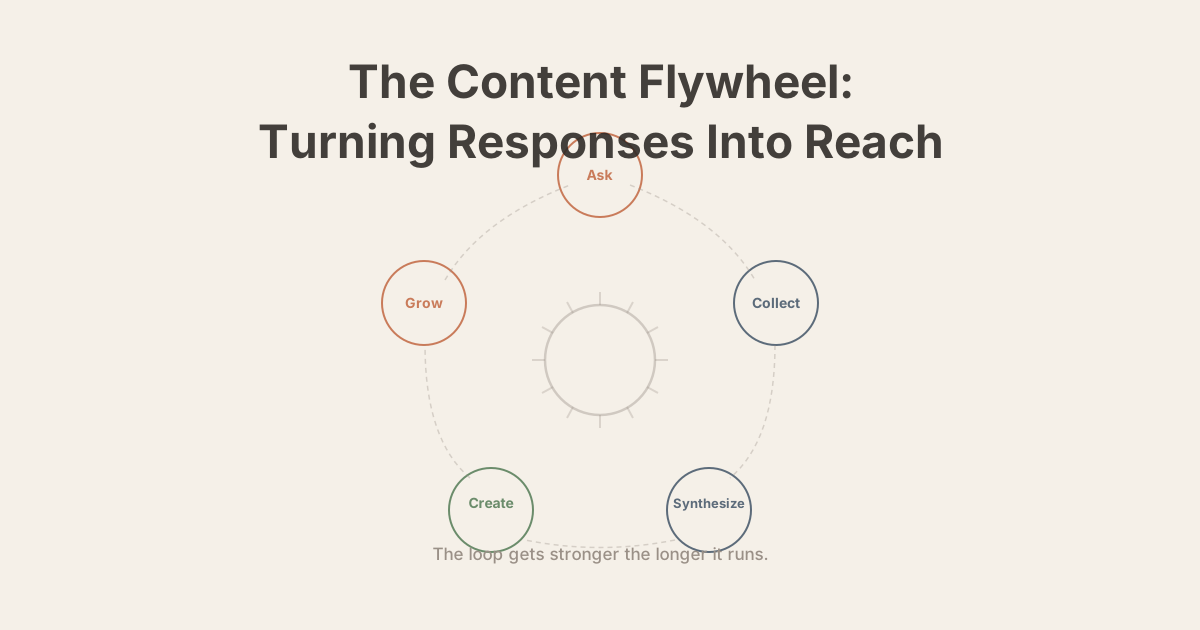
Ask → collect → synthesize → publish → attract → ask again. The loop gets stronger the longer it runs.
AskEveryone
Most growth strategies for creators depend on something outside your control: an algorithm, a platform change, a piece going viral, a collaboration with someone bigger. These things happen, and they're valuable when they do. They're not reliable.
There's a different kind of growth that's slower to start and harder to see in the early cycles — but that compounds without depending on anything external. It runs on something you already have: an audience that knows things, has opinions, and will share what they know if you create a reason to.
The flywheel isn't a metaphor. It's a mechanic.
How the loop works
The cycle: ask your audience a question → collect anonymous responses → find the themes → create content from what you heard → share what your audience told you → attract new people who find the results → ask the next question.
Each step feeds the next. The content you create from synthesis is grounded in documented demand — not your best guess about what might resonate, but specific themes that multiple people independently told you they wanted. The sharing of synthesis results closes the loop with existing respondents and creates a public artifact that new people can discover.
The cycle reinforces itself in both directions. People who see their input reflected in what you make respond more readily next time. People who discover your synthesis results and find them interesting become respondents in the next cycle.
Why each revolution matters
The question is where you create the raw material. A good question asked to the right people at the right moment generates responses that contain content direction you couldn't have generated internally. The quality of the question determines the quality of what's downstream.
The collection is passive — you wait and people respond. What makes this work is the combination of low friction and anonymity. The people who respond to an anonymous open question include people who would never engage publicly. Their responses are often more candid and more useful than what your public channels produce.
The synthesis is where the individual responses become collective signal. You're not working from one person's suggestion or a vocal minority's request. You're working from the pattern that emerged across many independent responses. That's different in kind — it carries a weight that individual feedback can't.
The content is the output. Not the endpoint — the flywheel means there isn't one. The content you make from synthesis becomes the input to the next question: people who engage with the content are primed to respond to the question that follows, because they've seen what you do with what you hear.
The sharing is what drives the external growth. When you publish synthesis results — what your audience told you, what themes emerged, what you're making from them — you create something that people outside your current audience can find and find interesting. Brands that run user-generated content flywheels see 75% of their content either created or directly informed by community members, with engagement rates over 2% and conversion rates over 4%. The mechanism works because people are drawn to evidence of genuine community, not just broadcast content.
What compounds over time
In the first cycle, you learn something. Maybe the themes surprise you. Maybe they confirm what you suspected. Either way, you make better content.
In the fifth cycle, response rates are higher than the first. The audience has learned that responding is worth it — that something happens with what they say. The questions are better because you've seen what works. The synthesis is richer because more people contributed.
In the twentieth cycle, you have a specific kind of audience that most creators never build: people who have participated repeatedly, who have history with the process, who feel genuinely invested in what you're making. Not because you asked them to be loyal, but because they've been part of something.
The compound effect isn't dramatic in any single cycle. It doesn't show up in a single analytics graph. It shows up in the fact that your audience has reasons to stay that don't depend on any individual piece of content being outstanding. The relationship is the retention mechanism, not the content alone.
The public results piece
The step that drives external reach is making synthesis results public.
Not all of it needs to be public — some findings are most useful as internal direction. But a summary of what you heard, the themes that emerged, and what you're making from them is genuinely interesting to people outside your current audience.
Someone searching for information about your topic might find your "here's what 400 people told me about X" piece and find it more credible than your own opinion — because it represents collective signal, not a single perspective. Someone curious about your audience might discover the results and want to become part of the next question cycle. Someone who was never going to find a traditional piece of content might find a synthesis result compelling enough to subscribe.
AskEveryone's public results pages are built for exactly this. But the principle is available through any channel — a newsletter issue, a video, a thread — that makes the collective voice of your audience visible beyond your current subscribers.
That's the external flywheel. The internal one runs on participation and content quality. The external one runs on the public artifact of a community that genuinely talks to each other.
Tags
Want insights like this for your audience?
Set it on autopilot. One question a week, every response analyzed into insights you can actually use.
Start free — no credit card